CVS Caremark client customization experience
CVS Caremark
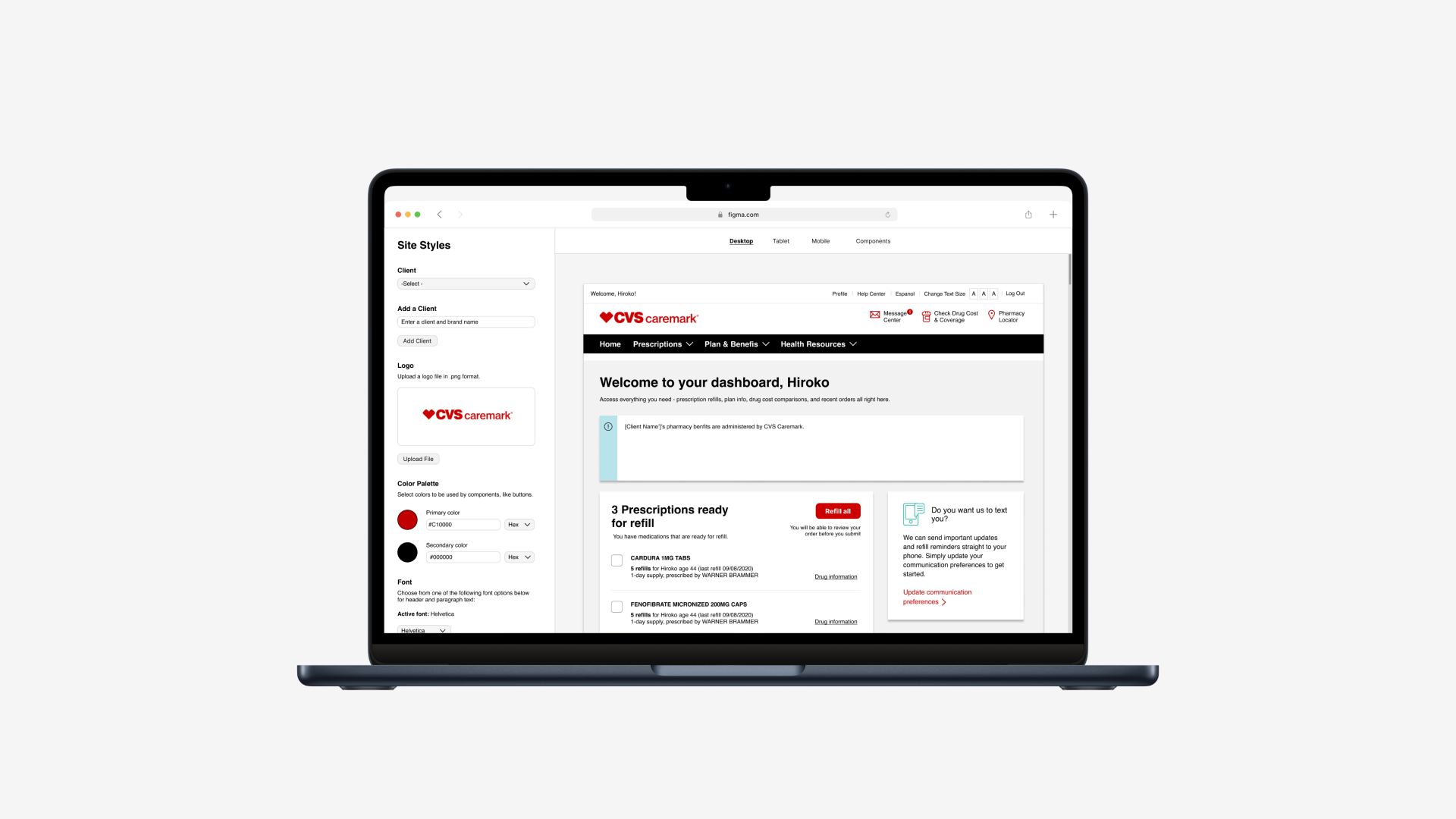
Project Summary
After the successful launch of a new client’s custom CVS Caremark web application, our team’s stakeholders requested that we consider how to scale our solution.
To do this, I led a research effort to examine the process for the previously launched implementation. Conducting 30+ interviews, I synthesized our findings into several service blueprints, which I used to facilitate discussions around our process pain points, empathize with our client’s and team member’s objectives and needs, and identify opportunities for improvement.
From our discussions, we prioritized the opportunities and collaboratively designed solutions including, new communication channels, a client brand intake form, and a custom in-house content management tool, via a series of workshops I facilitated.
Outcomes
Faster implementations, the new process enabled the team to design and deploy a custom CVS Caremark web application in just 3 months, as opposed to the launch of the first client’s application which took over 18 months to deploy.
Improved client satisfaction, the Content Management System provided transparency into our process and as a result our clients vocalized their appreciation of seamless transaction.
Reduced resources, the initial team consisted of 10 Experience Designers and Content Strategists. With our new process we were able to scope back the team to just a single Experience Designer for quality control purposes.
Role / Team
Self:
Planned the study and wrote the research plan
Conducted stakeholder interviews
Analyzed data and reported findings to effort stakeholders
Planned and facilitated workshops
Led design from sketching, wireframing, and annotations
Collaborated with stakeholders to define content strategy and wrote boilerplate content
Facilitated roadmapping exercises and defined product strategy
Design team:
Interview shadowing and note taking
Workshop participation
Design sketching, wireframing, and designed final user interface
Product team:
Workshop participation
Secured funding for the future of the service offering
Architecture:
Workshop participation,
Researched, planned, and developed the content management system “proof-of-concept”
Developed and integrated the minimum viable product (MVP) content management system into our token system and implementation process
Methods
Interviewing
Secondary (desk) research
Service blueprint mapping
Discovery Research and Process Pain Points
I drafted a research plan to understand the process followed for our first client’s custom PBM. Interviewing a variety of internal and external stakeholders, I synthesized our findings and presented them back to the team. The most problematic pain points included the following:
Technical limitations and lack of documentation
Competing legal feedback
Lengthy legal review processes
Unstructured client brand value collection
No client ownership
No alignment on the offering
Service Blueprints
Pain Points Resolved:
Competing legal feedback
Lengthy legal review processes
To help our stakeholders visualize our process and pain points, I created a service blueprint to facilitate conversations with our Product and Business stakeholders. The diagrams became an ideal tool to visualize the team’s process, client touch-points, and identify opportunities for improvement.
With a clearer understanding of our process, I facilitated sessions with our internal legal consultants to define how our client’s custom needs could fit into their ongoing work.
Brand Values Collection Form
Pain Point Resolved:
Unstructured client brand value collection
One of the most challenging and time-consuming parts of our implementation process was interpreting our client’s style guide and marketing assets. After closely collaborating with the Product and Engineering teams, I designed a brand value collection form to gather only the necessary assets for building a client’s custom CVS Caremark.com experience.
Leveraging this new form improved collection speed and accuracy, cutting the previous time from 2 months of “back-and-forth” conversations to just 2 weeks—accommodating time for review and edits, drastically improving efficiency and client satisfaction.
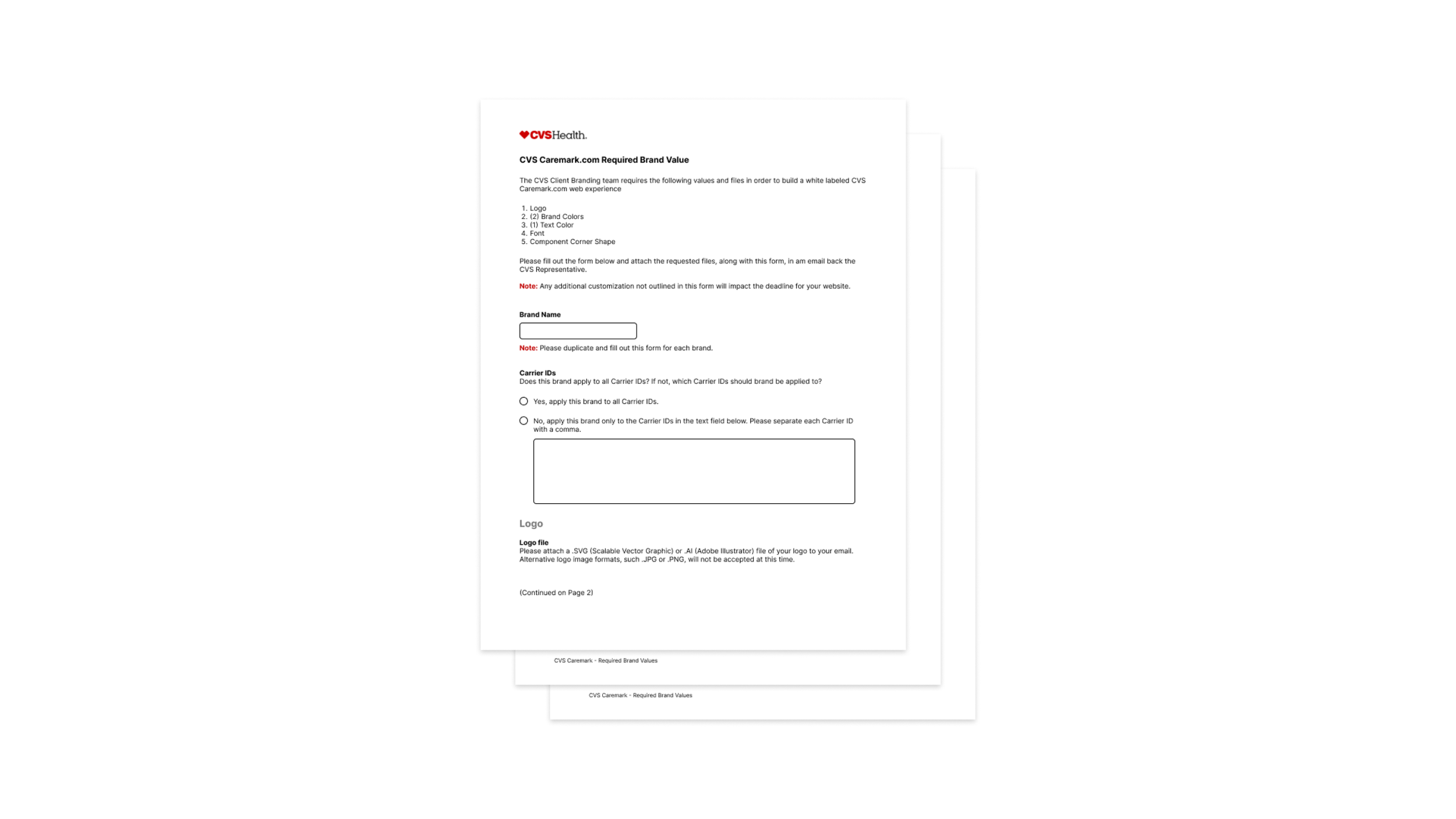
Custom Prescription Benefit Manager Client Brand Value Collection Form
Sketching Workshops and Wireframes
Pain Points Resolved:
Unstructured client brand value collection
Client Ownership
I facilitated several workshops to design an internal configuration tool to enable the team to quickly generate a preview of the client’s custom CVS Caremark.com website. In addition to showing the client what they were paying, the tool directly interfaced with our design token system, which enabled our engineers to export the necessary JSON file needed for implementation.
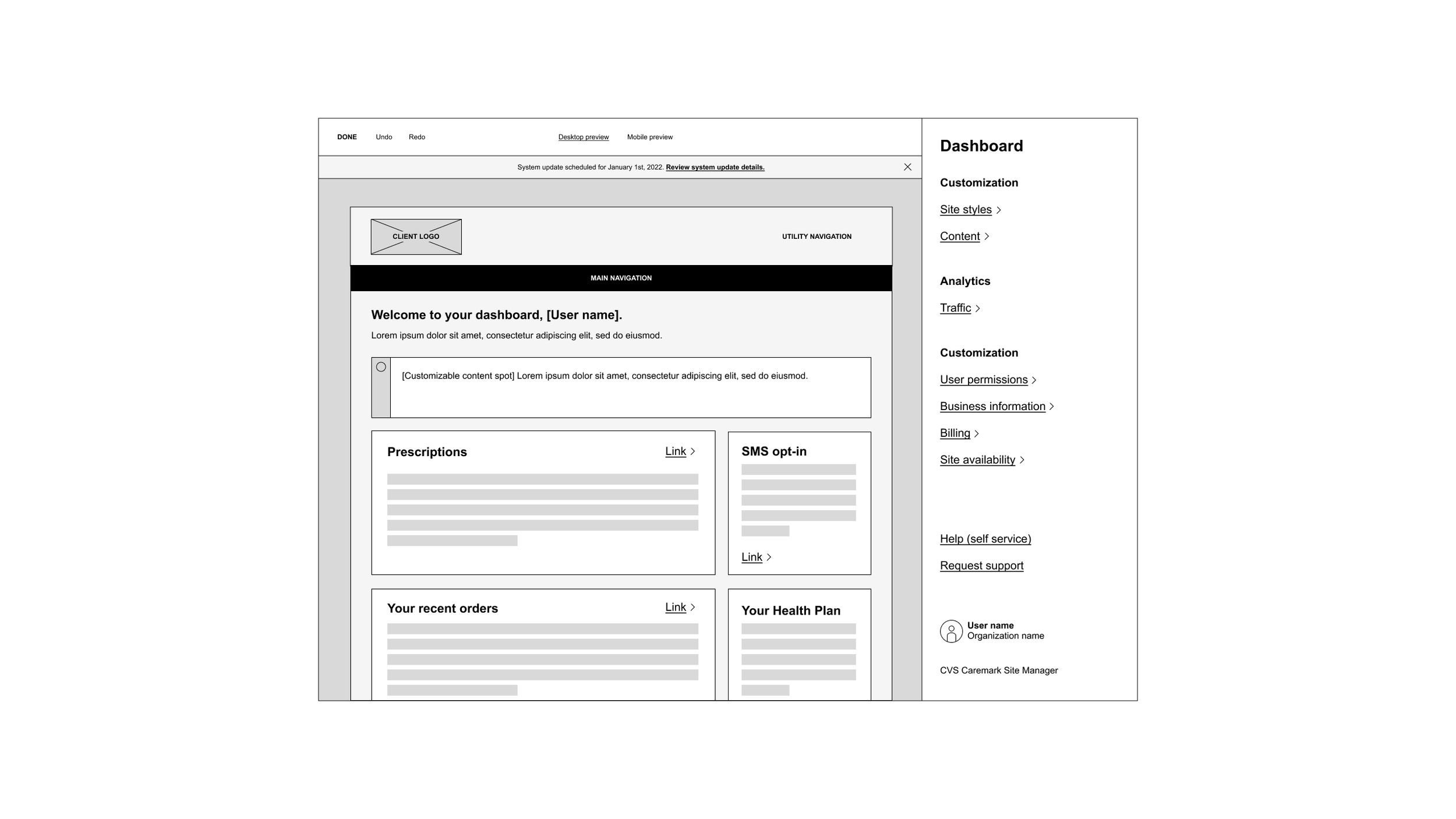
One of several wireframes from collaborative workshops
Process Documentation, Alignment, and New Communication Channels
Pain Points Resolved:
Technical limitations and lack of documentation
Unstructured client brand value collection
Client Ownership
One of the more significant hurdles with this effort was cross-team alignment. With several major teams involved, including Engineering, Architecture, Product, Design, and our business-to-business account managers, clear communication was vital to our success. To combat our previous inefficiencies and miscommunications, I facilitated workshops and interviews to document and align the various groups on our service offering and process.
The result was a 50+ page wiki and new client-specific communication channels that, by proxy, archived all decisions, project statuses, and client discussions–keeping all teams in perfect sync.
Confluence and Microsoft Teams logos, applications used for communications and documentation
Product Roadmap
Pain Points Resolved:
No alignment on offering
I facilitated several workshops to foster a shared understanding of our client’s and implementation team members’ needs, tasks, and goals as part of our process. Starting with empathy, I leveraged the previous process research to inform the collaborative creation of proto-persona. Creating these artifacts together grounded our team and stakeholders and made them feel included in the conversation.
After developing a shared understanding of our “users,” I shifted the conversation back to the implementation process and our opportunities for improvement. First, we reviewed our past research that detailed the benefits of our proposed in-house CMS (Content Management System), which our team needed to align on the scope.
Reviewing a list of over 30 proposed features and functions for the CMS, we began bucketing various tools into their respective task in the implementation process. For example, an automated accessibility color checker would replace one of the tasks of our CVS UI designers, who, in our current process, review all colors to ensure that they are compliant with CVS Health and WCAG standards.
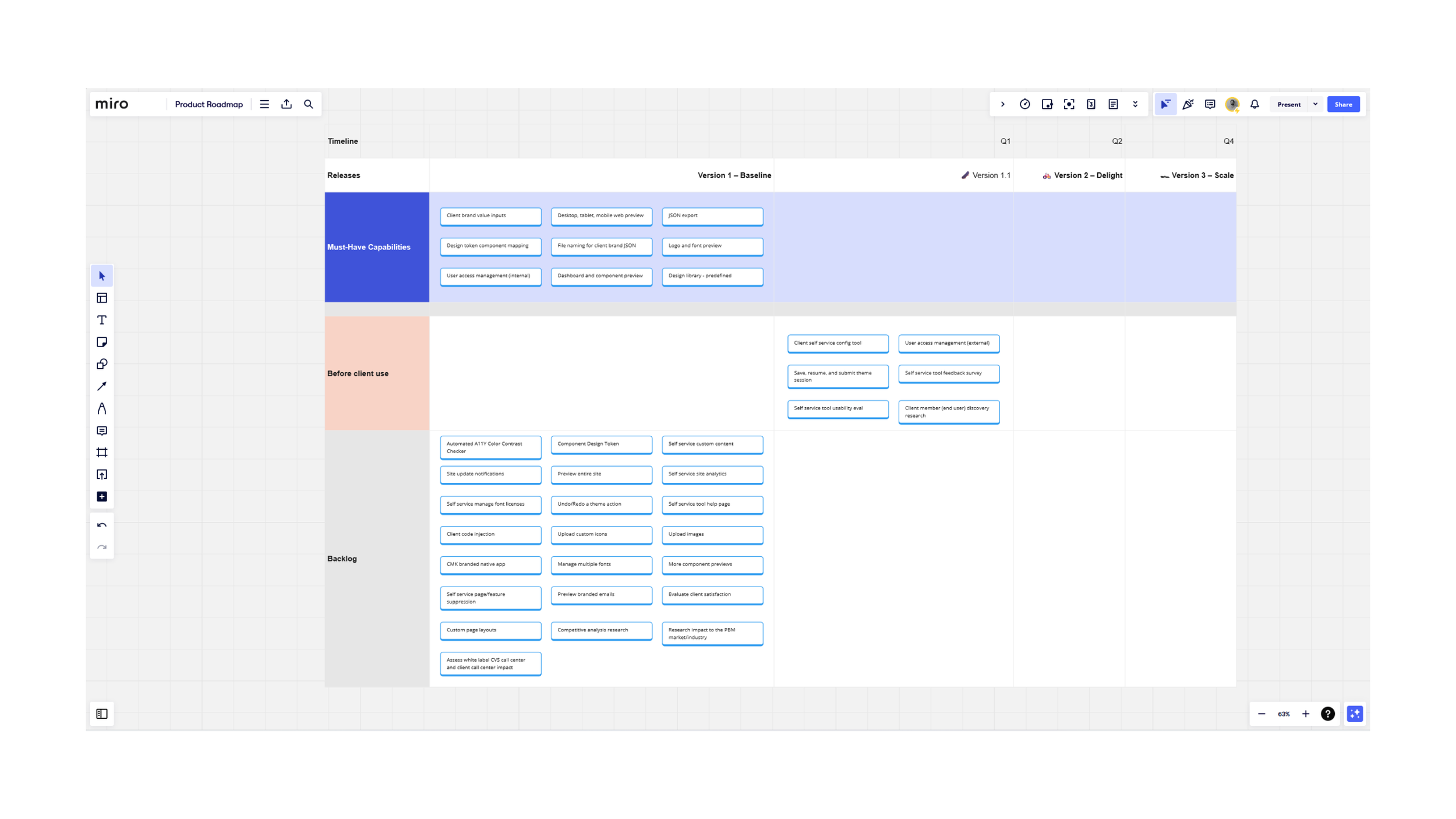
Sanitized Content Management System Product Roadmap
With the features bucketed, we mapped out the features across 3 phases:
MVP (minimum viable product) - for our team, this meant what features would have the most significant impact and save us the most time.
Features needed before client usage - the team’s vision, or North Star, was to inevitably scale the in-house CMS solution into an externally facing product that our clients could use—I.e., eliminating additional CVS steam members from the process and, by proxy, saving time and money.
Our last bucket of features built up our backlog. These features were not essential to our MVP. However, we knew that several, if not most, would provide value and were worth investigating in the future.
Want to learn more about this case study?

Next project:
Insurance web application navigation redesign
Improved policyholder task completion rate with generative and evaluative research.